Rosacea worse on metronidazole? Purging is the least likely reason.
Early worsening on a rosacea topical has three ordinary explanations: the base, an allergy, or the diagnosis. A dated log tells them apart.
Rosacea worse after starting metronidazole: what's going on
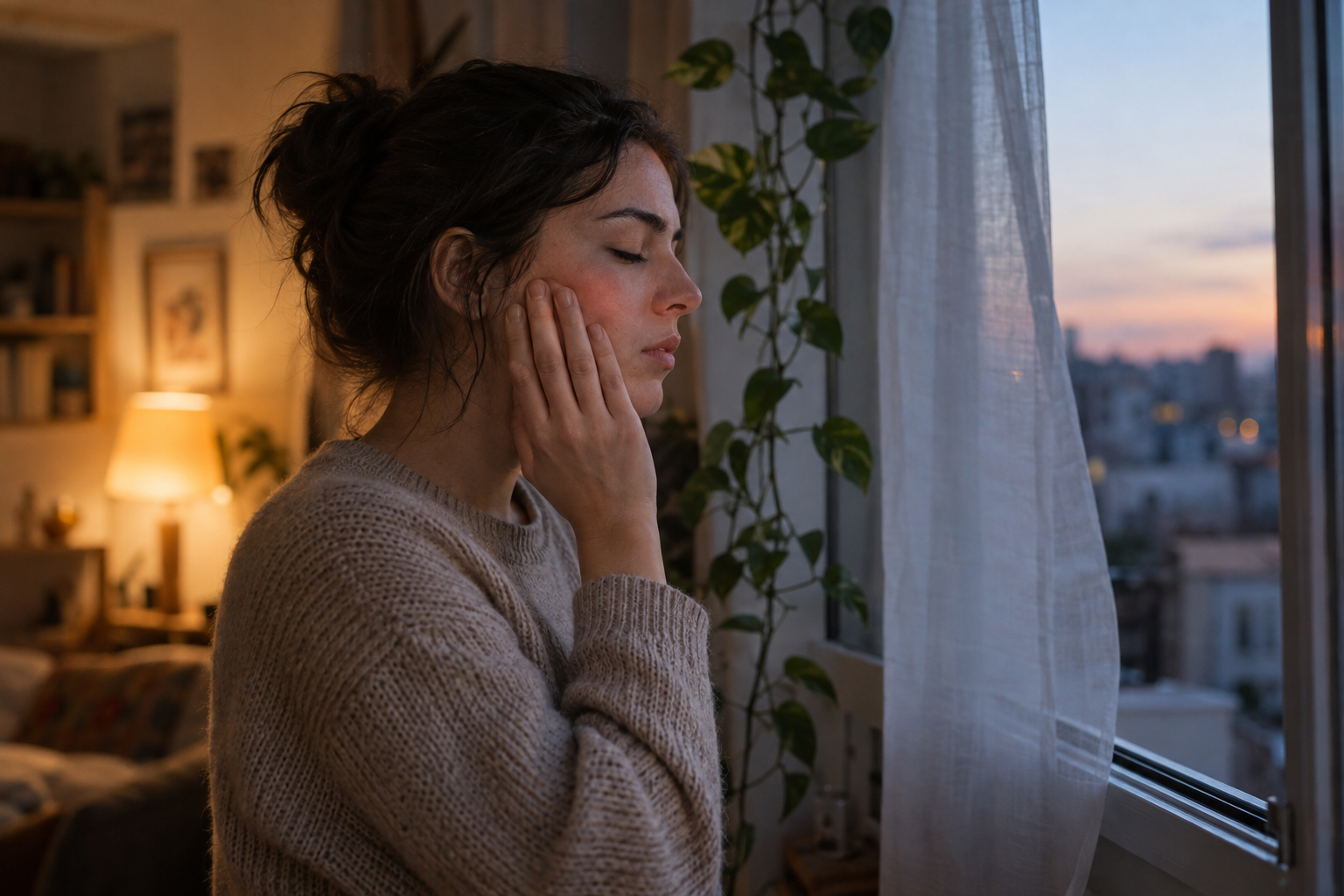
Day nine on a new metronidazole gel, and the cheeks that were meant to settle are hotter than they were before the prescription. The tube says twice daily. A forum thread says keep going, it's just purging.
Rosacea that looks or feels worse in the first weeks of topical metronidazole usually traces to one of three things: irritation from the cream, gel or lotion base, a true contact allergy to the drug or an inactive ingredient, or a diagnosis that was something other than rosacea from the start. Purging is the weakest candidate of the lot.
Each of those causes leaves a different trail on the skin. So the useful move in week one is a dated log your dermatologist can read in two minutes.
The three-trail rule
We call it the three-trail rule. Early worsening on a rosacea topical has three ordinary explanations, and each one shows up differently in timing, sensation and location.
Irritation is the least dramatic. Burning or stinging arrives within minutes of applying, stays inside the area you treated, and eases over the following hours. The base matters here. Gels, creams and lotions carry different inactive ingredients, and skin with rosacea's reactive barrier can object to one and tolerate another.
Allergy behaves differently. Itch tends to lead. It builds with repeat applications instead of fading, and it can creep past the edges of where the product went: onto the eyelids, along the jaw, down the neck.
The third trail is the uncomfortable one. Perioral dermatitis, seborrheic dermatitis and steroid-induced rosacea can all pass for rosacea at a first visit, and none of them is guaranteed to respond the way rosacea would.
Signal
Vehicle irritation
Contact allergy
Different diagnosis
Main sensation
Burning or stinging
Itch, sometimes with burning
Varies: itch and flaking (seborrheic), burning around the mouth (perioral)
Timing
Minutes after each application, easing within hours
Builds over days of repeated use
Present before the new tube, or follows stopping a facial steroid
Location
Only where the product went
Can spread past the application area (eyelids, neck)
Around mouth and chin with a clear rim at the lip; brows, nose folds, scalp
What looks different
Dryness, tightness, mild peeling
Rough, eczema-like patches; swelling or tiny blisters in stronger reactions
Greasy yellowish scale, or small bumps clustered around the mouth or nose
Question to bring
Would a different vehicle suit my skin?
Should I be patch tested?
Could this be something other than rosacea?
General clinical patterns to discuss with a dermatologist, not a diagnostic tool. Overlap between columns is common.
Is rosacea purging a thing?
Purging comes from the retinoid world. Tretinoin and its relatives speed up skin cell turnover, which can push clogged pores (comedones) to the surface faster, so acne can look worse before it improves. The idea made sense there, and it spread.
Rosacea doesn't fit that story. Comedones aren't part of it. Their absence is one of the classic ways clinicians separate rosacea from acne. And metronidazole doesn't work by speeding turnover. Its benefit in rosacea is generally attributed to anti-inflammatory and antioxidant effects In vitro studies show metronidazole interferes with neutrophil release of reactive oxygen species that cause tissue injury, suggesting an anti-inflammatory/antioxidant mechanism in rosacea. ([source](https://www.skintherapyletter.com/rosacea/topical-metronidazole-update/)), which leaves a purge nothing to push out.
So 'push through, it's purging' borrows the logic of a different drug for a different disease. That advice is cheap to give on a forum and expensive to follow for three weeks if the real problem is an allergy.
A purge needs something to push out. Rosacea on metronidazole doesn't have it.
What the literature supports, and where it goes quiet
Topical metronidazole has been a first-line rosacea treatment for decades, sold in gel, cream and lotion forms. US-available topical metronidazole includes 0.75% gel (MetroGel, Galderma) and 1% gel (METROGEL 1%), with cream and lotion (MetroLotion) formulations also referenced. ([source](https://www.skintherapyletter.com/rosacea/topical-metronidazole-rosacea/)). Its prescribing information lists local reactions such as burning, stinging, dryness and irritation. Topical metronidazole cream labeling reports skin discomfort (burning and stinging) as the most frequent event, followed by erythema, skin irritation, pruritus, and worsening of rosacea. ([source](https://dailymed.nlm.nih.gov/dailymed/drugInfo.cfm?setid=567c7c0c-ffc1-47c1-b0fb-8715bf3d76b9)). That's the irritation trail, and it's on the label because it happens.
Allergic contact dermatitis to topical metronidazole has also been reported in the medical literature. It's a different trail from irritation, and a dermatologist can patch test both the drug and the inactive ingredients in the specific product you were given.
The diagnostic overlap is well described too. The 2017 National Rosacea Society expert committee update (Gallo et al., JAAD 2018) and the ROSCO panel (Tan et al., BJD 2017) moved rosacea toward phenotypes, meaning individual features like persistent redness, bumps, flushing and burning get assessed one at a time. That approach makes look-alikes easier to catch. It also means a log should track features separately instead of one "worse" score. Separately, using topical corticosteroids on the face can produce a rosacea-like eruption that rebounds when the steroid stops.
Where the literature goes quiet: there are no good published numbers on how often each trail explains early worsening. We won't put a percentage on any of them.
Redness is the hardest signal to see on deeper skin
On Fitzpatrick IV to VI skin, rosacea redness can read as darker brown or violet, or barely show in photos. Burning, stinging, dryness and texture carry more weight in the log, so score sensation separately from color.
A two-week log, walked through
Picture a hypothetical patient who starts a metronidazole cream on a Monday after a first rosacea diagnosis. By Thursday the cheeks sting. By the second Monday they want to quit.
A useful log for those fourteen days has one row per day and a handful of columns. Score burning or stinging and itch separately, each 0 to 3, about ten minutes after the morning application. Count papules (small red bumps) on each cheek in the same light. Note where symptoms sit: only where the cream went, or beyond it. Record the vehicle and every other product that touched the face, plus anything that stopped, like an over-the-counter hydrocortisone.
Now read it back. Burning that spikes after each application and drops by evening, confined to the cheeks, points at the vehicle. Itch climbing day over day and turning up on the eyelids points at allergy. Bumps already clustering around the mouth, with a clear strip of skin right at the lip, point back at the diagnosis.
And if the hydrocortisone went in the drawer the same week the metronidazole came out? That goes on the first line of the page.
Column
What to record
Why it matters
Date and day number
Calendar date plus days since first application
Lines up every change with the start date
Burning / stinging
0 to 3, about 10 minutes after applying
Fast, application-linked burning fits irritation
Itch
0 to 3, same time
Itch that builds over days fits allergy
Papule count
Small red bumps per cheek, same light each day
Separates rosacea activity from barrier irritation
Location
Applied area only, or beyond it (eyelids, neck, around the mouth)
Spread past the product suggests allergy or a different condition
Product and vehicle
Cream, gel or lotion, strength, and every other product on the face
Shows what to change first
Stops and starts
Anything stopped or started, especially facial steroids
Steroid withdrawal can mimic a flare
Log once a day, same time, same light. A photo alongside each row helps.
Stop, switch the base, or rethink the diagnosis
Each trail maps to a different conversation. Irritation raises the question of a different vehicle or a gentler routine around it. Allergy raises patch testing and a different medicine. A look-alike condition raises a re-examination, which sometimes changes the whole plan.
Those are calls for your dermatologist, and changing course alone can muddy the picture. But arriving with 'it's worse' gives them one data point. Fourteen dated rows give them a pattern.
Whether the treatment is working is a separate question, and judging that takes weeks longer. We cover that window in our prescription trial-window piece The internal link slug is "rosacea-treatment-response-documentation", which gives the path /articles/rosacea-treatment-response-documentation. The article is titled "What to Log During the Rosacea Treatment Trial Window" and covers what to document while a prescription topical is on trial.. The first-weeks question is narrower: is this reaction a reason to change course now?
Call promptly, don't wait for the log
Swelling of the eyelids or lips, blistering or oozing skin, a rash spreading well beyond the face, or eye pain and vision changes need a same-day call to your prescriber. Facial swelling with any trouble breathing is an emergency.
Where Skinframe fits
The log above works on paper. Skinframe keeps the same structure on your phone: rosacea features scored one at a time, so burning, itch, bumps and redness never collapse into a single number, with dated photos sitting next to the scores. Your entries stay on your device.
There's no published rosacea-specific trial of tracking apps. Evidence in adjacent dermatology conditions (atopic dermatitis, psoriasis) shows patient-reported tracking improves visit outcomes, and Skinframe applies the same approach to rosacea.
Whichever trail your first two weeks follow, bring the record to your dermatologist. They make the call. The log makes it faster.
Start your first-weeks log in Skinframe
Skinframe is built around the 2017 phenotype approach to rosacea (Gallo et al., JAAD 2018; Tan et al., BJD 2017): each feature scored separately, photos as evidence, and data kept on your device. There's no rosacea-specific trial of tracking apps. Evidence in adjacent conditions (atopic dermatitis, psoriasis) shows patient-reported tracking improves visit outcomes, and Skinframe applies that approach to rosacea.