A birth-control change resets your rosacea baseline, so log the date.
Any start, stop, or switch of a hormonal contraceptive resets your rosacea baseline. Log the date, or spend the next two months blaming the wrong moisturizer.
The moisturizer took the blame
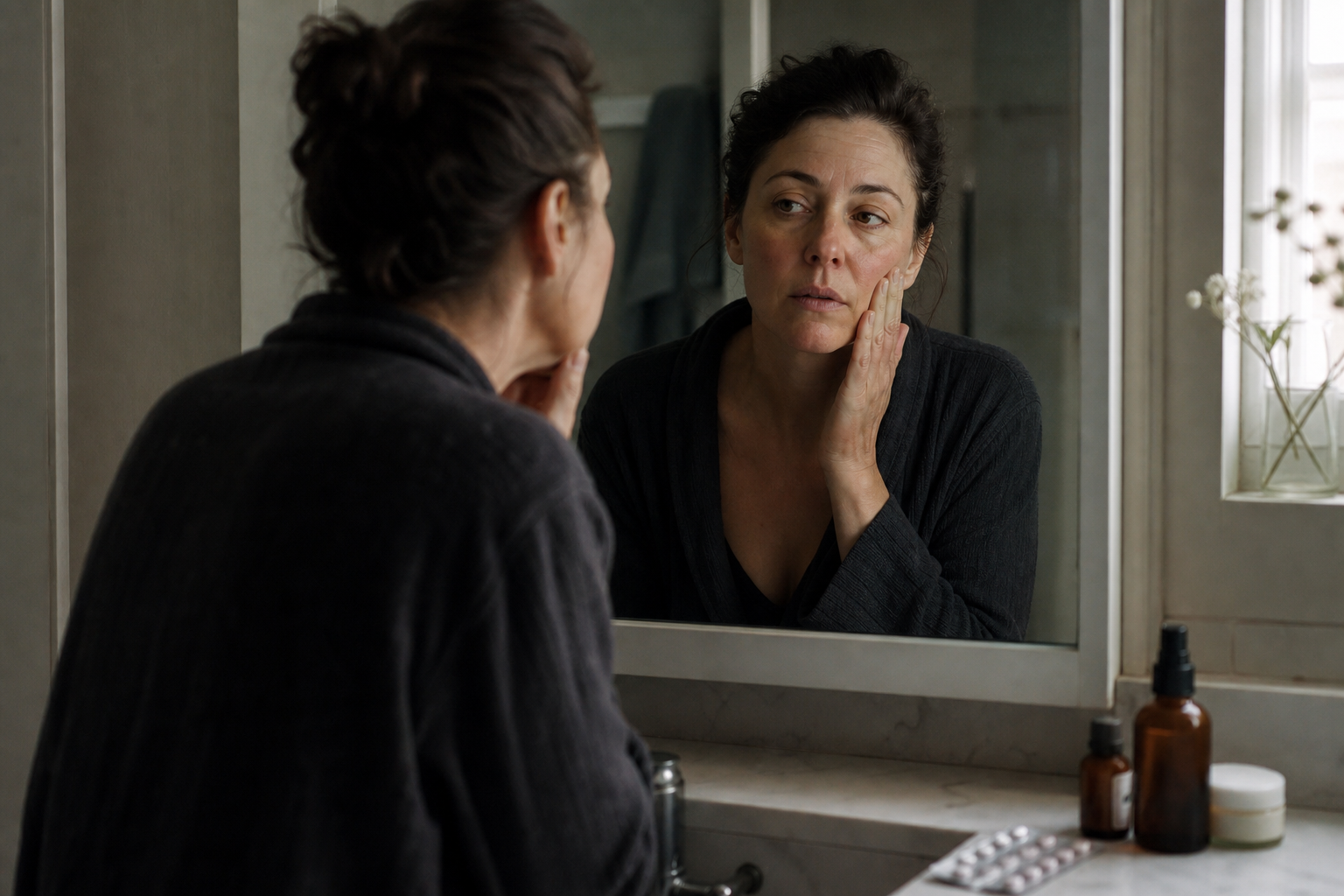
She stopped the pill in March. By April her cheeks were running hotter than they had in years, a deep flush that lingered after every coffee and every warm room. She did what careful people do: she looked at what had changed. A new moisturizer had gone into rotation three weeks earlier, so the moisturizer got the blame and went in the bin. The flushing stayed. The moisturizer was innocent. The variable that actually moved was the one she never wrote down, because stopping a medication does not feel like a skincare event, and so it never makes it into the skincare log.
The baseline reset
The pattern shows up in rosacea logs again and again, and it has a name we use internally: the baseline reset. Any start, stop, or switch of a hormonal contraceptive is a baseline event. It changes the physiological floor your skin operates from, which means every trigger correlation you had built up to that point is now measuring against a moving reference. Rosacea is a vascular condition, meaning it lives in the blood vessels of the face and shows up as flushing and persistent redness. Hormones are one of the levers on those vessels. Change the lever and the log that made sense last month is quietly measuring the wrong thing.
Does the pill make rosacea worse is the wrong question
The search box fills with one question: does the pill make rosacea worse. It is the wrong question, or at least an incomplete one. The interesting variable is not the direction of the effect, it is the transition itself. Framing it as good pill versus bad pill sends people hunting for a formulation verdict that the literature cannot cleanly give, and it skips the one thing every patient can actually act on: the date the hormones changed. A formulation debate you cannot resolve is far less useful than a timestamp you can. The transition is where the signal is.
What the physiology supports, and where it stops
Estrogen has vascular effects. It influences vasodilation, the widening of blood vessels that drives flushing, and the broad clinical association between falling estrogen around menopause and increased flushing is well described Declining estrogen levels may increase vasoreactivity and flushing responses in menopausal women. ([source](https://jintegrativederm.org/doi/10.64550/joid.jzw4me05)). From that, an estrogen-protective hypothesis follows: estrogen-forward states may dampen the flush, while progestin-dominant formulations, some of which carry androgenic activity (an effect resembling male sex hormones that acts on the sebaceous glands and the vessels), may push the other way. That is a hypothesis, not a settled dose-response curve. The rosacea-specific contraceptive literature is thin, and we will not tell you it says more than it does.
We are not telling you which pill to take
The direction of a formulation's effect on rosacea is a hypothesis, not a settled dose-response curve, and the rosacea-specific contraceptive literature is thin. Any decision about starting, stopping, or switching a contraceptive belongs with your dermatologist and prescriber, never a tracking app.
Walk a switch forward
Take a switch rather than a stop and walk it forward. Someone moves from one combined pill to a progestin-only formulation on a Tuesday. Weeks one through three: skin is unremarkable, and last month's clean data still looks trustworthy. Week five: flushing episodes climb. The instinct is to scan the last few days for a food or a product, because that is how trigger logs are usually read, one recent input at a time. But the input that moved was ten days back and is still moving, since hormonal effects on skin do not resolve in an afternoon. For readers with deeper skin tones, the tell may not be visible redness at all but the sensory phenotype: burning, stinging, or a warmth that outlasts the room. Log the change date, and the whole confusing month reassembles into a shape that makes sense.
Weeks since the change
What your skin is doing
How to read your trigger log
0 to 2
Skin often lags; the old baseline is still roughly valid
Log the change date. Flag it as the start of a reset window.
Quarantine new trigger conclusions. A flare here is likely the reset, not a food or a product.
8 to 12
Approaching a new, stable floor
Patterns begin to mean something again. Start re-testing suspected triggers.
12+
New baseline established
Resume normal trigger mapping against the new reference.
Hormonal shifts take time to show up in the skin, and the process tends to unfold over weeks to months rather than overnight. Individual timelines vary.
Quarantine the window
If the reset is real, one habit changes everything about the weeks after a hormonal change: you mark the date, then you quarantine the window. Quarantine meaning you stop trusting new trigger conclusions until the skin settles. A flush at week four is not evidence that red wine got worse or that your new serum is the culprit. It is most likely the baseline still moving underneath you. Treating that window as signal instead of noise is how people avoid binning innocent moisturizers and swearing off foods that never did anything to them.
The change date is the single most useful thing to have written down, and it is the one thing almost nobody logs.
Where a log falls down
This is the gap we built Skinframe to close. Most tracking, whether an app or a notes file, is built around inputs you already think of as skin-related: products, foods, weather, sleep. A medication change lands outside that frame, so it goes unrecorded and the log silently corrupts from a date nobody wrote down. We treat a contraceptive start, stop, or switch as a first-class baseline event, timestamped and visible on the same timeline as your flares and your photos, so that when you look back at a confusing month you can see the reset sitting right there at the beginning of it. The photo is the evidence. The change date is the context that makes the photo legible.
What we are tracking next
We are watching where the reset window actually lands in real logs, because the 8-to-12-week clinical ballpark is a population average and individuals vary. What we can say now: for roughly two to three months after any hormonal contraceptive change, treat your trigger log as provisional. Note the date, keep photographing, and hold off on firm conclusions until the skin has a stable floor to measure against. And because none of this replaces a clinician who knows your history, bring the change date and the timeline to your dermatologist, especially before making any decision about the contraceptive itself. That decision is yours and theirs to make together, never an app's.
Skinframe is coming to iPhone. Join the waitlist and be ready to log your next baseline event before it turns into two months of noise.
Skinframe treats a birth-control start, stop, or switch as a baseline event on the same timeline as your flares and photos, so a confusing month reads as signal instead of noise. It is built by a small team that reads the dermatology literature and keeps your data on your device.