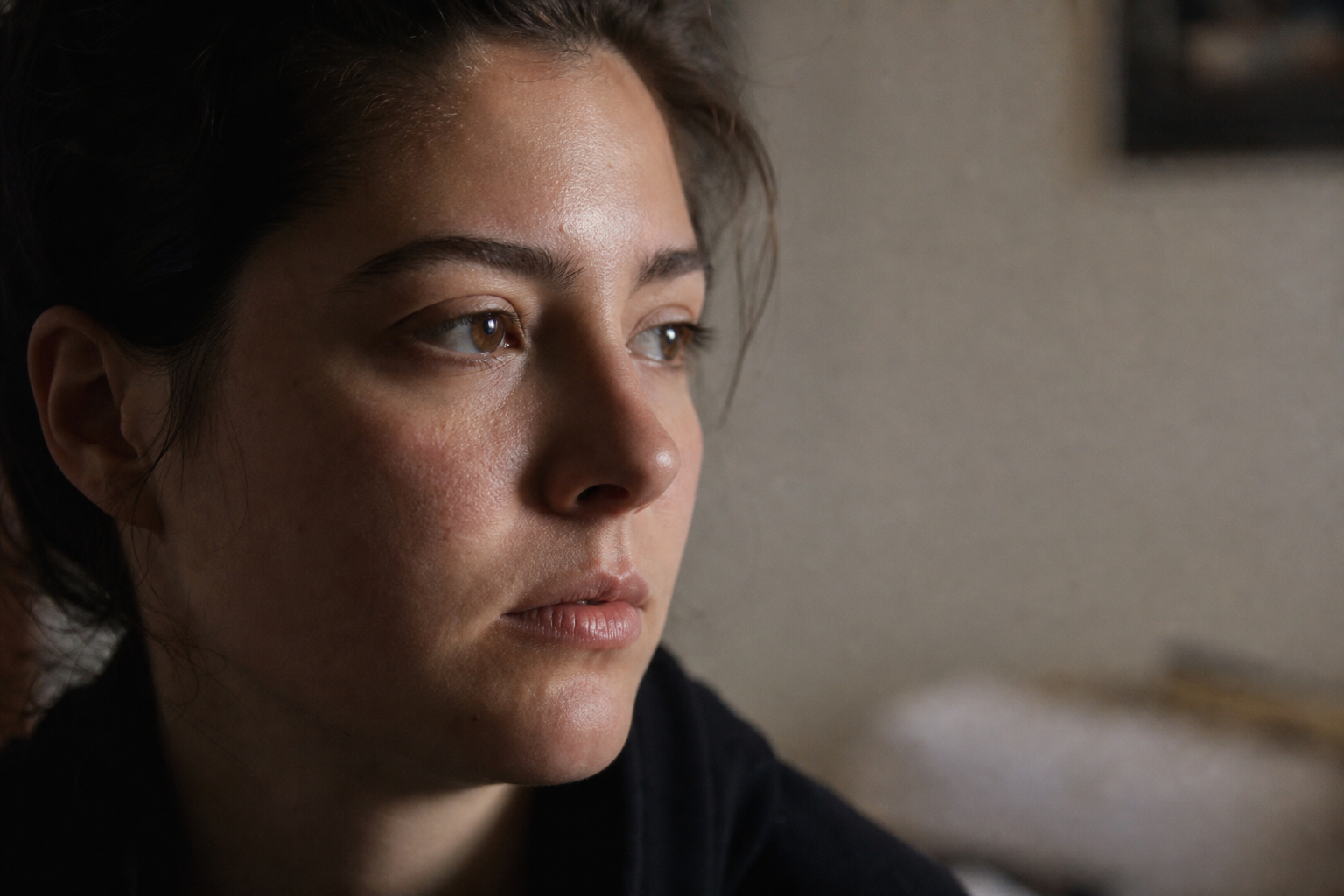
Trigger lists describe crowds, not faces. The only study that can find your rosacea triggers is the one you run on yourself.
You did everything the list said, and your face flared anyway
You cut red wine for thirty days. You skipped the sauna, kept your coffee lukewarm, and bought the sunscreen the forum swore by. Then on day nineteen, for no reason you can name, your cheeks lit up anyway. The list said you were doing everything right. Your face disagreed.
This is the quiet failure mode of rosacea advice. The internet is full of trigger lists (heat, sun, alcohol, spicy food, stress), and every one of them is true for someone. The problem is that none of them is a list of your triggers. It is a list of everyone's, averaged together, and you cannot eat, drink, or live an average.
The thesis: your triggers are a sample size of one
Here is the reframe we keep coming back to. Rosacea's published trigger lists describe populations. Your face is not a population. It is one person, with one set of triggers, observed under one set of conditions. In research terms, finding your triggers is an n-of-1 study: a single-subject experiment, where the only valid data is the data you generate about yourself.
That is not a slogan, it is a method. An n-of-1 design (also called a single-case experimental design) is a recognized way clinical researchers isolate cause when the sample is one patient. You change or watch one variable, you measure the outcome, you repeat. Applied to rosacea, the 'measurement' is a dated photo and a short note about what you did that day. Done consistently, it turns a guessing game into evidence.
Why the trigger list is the wrong tool
A trigger list is an aggregate. It tells you what is common across many patients, not what is causal for one. That gap produces two opposite mistakes, and most people make both at once.
The false positive: you cut something that was never your trigger. Weeks of wineless dinners, no change, because alcohol was never the variable that mattered for you. The false negative: the thing that does flare you is not on the list, or sits so far down it that you never test it.
Two more facts make lists actively misleading. Triggers stack, so a glass of wine alone may do nothing while wine plus a hot room plus a bad night of sleep crosses a threshold together. And flares lag. A flare can surface hours after the exposure Skinframe applies trigger-specific lag windows drawn from published rosacea literature: acute physical triggers like heat, alcohol, spicy food, and sun exposure are matched to flares that occur within hours of exposure, while hormonal and stress-related triggers use a longer window that extends across days. This means the app can surface a pattern even when the flare does not appear until the following day or beyond., long enough that same-day memory pins the blame on the wrong culprit. A list cannot fix a timing problem. Only a dated record can.
What the literature actually supports
The National Rosacea Society's patient surveys give us the canonical aggregate triggers: sun exposure, emotional stress, heat, alcohol, and spicy food repeatedly top the list In an NRS rosacea triggers survey, sun exposure was the top trigger at 81%, followed by emotional stress at 79% and hot weather at 75%. ([source](https://www.rosacea.org/patients/rosacea-triggers/rosacea-triggers-survey)). Useful as a starting menu of candidates. Useless as a personal verdict, because the between-person variation behind those averages is wide, and the literature itself does not agree on every entry. The red-wine-versus-white-wine question and the role of Demodex mites (the microscopic skin mites implicated in some rosacea) are both genuinely unsettled, and we are not going to pretend otherwise.
There is also a visibility problem the lists ignore. Erythema, the medical word for visible redness, is harder to see on richer skin tones. On Fitzpatrick types IV to VI (the deeper end of the skin-tone scale), redness can read as warmth, dryness, or dusky shading rather than pink. Adamson & Smith 2018 and Daneshjou 2022 documented how systems that lean on visible-redness cues fail harder on darker skin. For self-tracking that means the reliable signal is often the sensory phenotype: how the skin feels, the burning, stinging, and tightness, not only how it looks. A method that records both beats a method that records neither.
The pattern in practice: six weeks, one variable at a time
Picture how this runs. Each day you take one photo in the same light (a window at the same hour works), and you tap a few candidates: hot shower, workout, two coffees, glass of wine, four hours of sleep, day twelve of your cycle. Thirty seconds. You are not diagnosing anything; you are building a record.
At first it looks like noise. By week three the photo timeline starts disagreeing with your assumptions. You had blamed wine, because wine nights are memorable. But laid out against the images, the flares cluster on the nights after a hot shower followed by a workout, wine or no wine. The variable was heat, and the photo is the evidence that overrides a memory built to confirm what you already feared. From there you test deliberately: keep the workout, drop the post-workout hot shower for two weeks, watch the timeline. One variable, measured against your own baseline.
What changes when triggers are n=1
If your triggers are a sample size of one, the unit of progress stops being a better list and becomes a better record. You are no longer memorizing what flares people in general; you are accumulating evidence about what flares you. That is a quieter, slower job than the elimination-diet sprint most people try first, and it is far more likely to land on something real.
It also changes the appointment. A dermatologist works with what you bring. Arrive with 'I think it might be wine, or maybe stress,' and you are guessing together. Arrive with six weeks of dated photos and a pattern that points at heat, and the visit starts from evidence. Tracking does not replace a clinician; it gives the clinician something to work with.
Where this method lives
This is the method we built Skinframe around, because no list was ever going to do this job. A photo taken in consistent conditions, a few taps for the day's candidates, kept on your device rather than uploaded for scoring. We deliberately do not run skin-AI to grade your redness: Adamson & Smith showed why visible-redness automation misreads darker skin, so the reading stays with you and your dermatologist, where it belongs.
We are honest about the evidence here. There is no rosacea-specific trial proving a tracking app changes outcomes. But research in adjacent dermatology conditions, atopic dermatitis (eczema) and psoriasis, shows that patient-reported tracking improves what happens in the exam room The EczemaWise app allows patients to track symptoms, treatments, potential triggers, and photographs of disease activity longitudinally. ([source](https://www.dermatologytimes.com/view/derm-dispatch-eczemawise-app-and-its-role-in-patient-centered-care)). Skinframe applies that same approach to rosacea. The n=1 method works on paper too; the app just makes the daily thirty seconds something you will actually keep doing.
What we are still working out
Two open questions sit at the edge of this method, and we would rather name them than paper over them. First, the lag: can a per-person flare window be estimated from enough logged data, so the timeline learns roughly how long after an exposure your skin tends to react? Second, the unsettled triggers: whether careful n=1 records, pooled across many consenting users, could help the field move the red-wine-versus-white-wine and Demodex debates the population surveys have left open. We are tracking both. Neither is a promise.
If any of this is shifting your skin, the next step is not a stricter list. It is a record, and a conversation: talk to your dermatologist.
Run your own n=1 study without the spreadsheet. Skinframe turns the daily thirty seconds, one photo plus the day's candidates, into a timeline you and your dermatologist can actually read. Get Skinframe for iPhone.
There is no rosacea-specific trial proving a tracking app changes outcomes, and we will not claim one. What the literature does show is that in adjacent dermatology conditions like atopic dermatitis and psoriasis, patient-reported tracking improves what happens in the exam room. The n=1 method is the application of that same principle to rosacea: build evidence about your own face, then bring it to someone who can read it with you.